


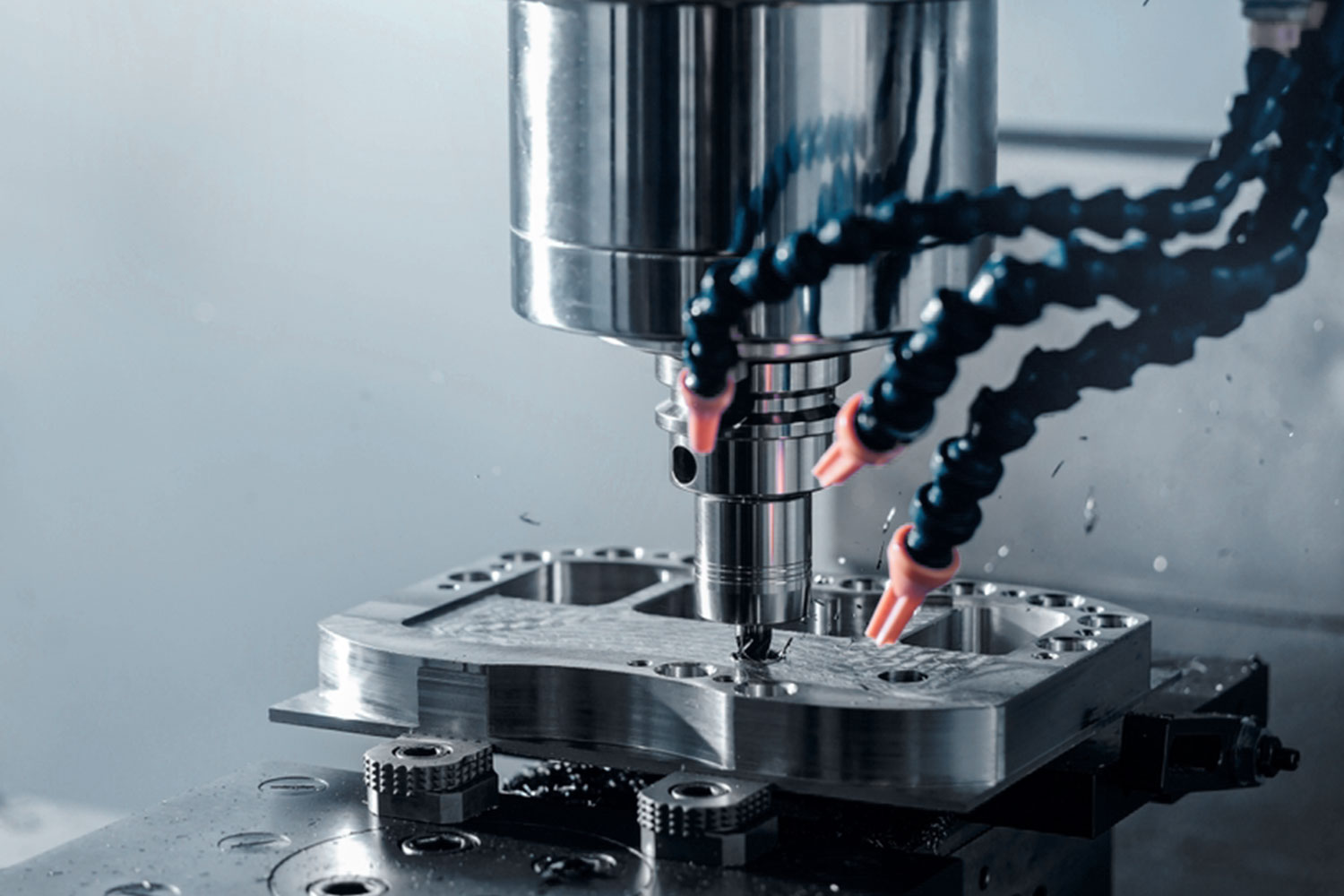
Introduction: Precision in Extrusion Begins at the Die
In aluminium extrusion, the press provides force, the billet provides material, but the die defines precision.
For high-performance industrial applications, dimensional accuracy, surface finish, and mechanical consistency are not achieved by chance. They are the result of advanced die engineering combined with predictive simulation tools.
As aluminium profiles become:
- Wider
- Thinner
- Structurally complex
- Functionally integrated
Traditional trial-and-error die development is no longer viable.
This is where advanced die design supported by QForm simulation has become a critical enabler of high-precision aluminium extrusion manufacturing.
Why Die Design Is the Most Critical Element in Extrusion
An extrusion die must:
- Distribute metal flow uniformly
- Balance pressure across the profile
- Maintain dimensional stability
- Withstand extreme thermal and mechanical stress
- Deliver repeatable results over long production runs
Any imbalance in die design leads to:
- Profile distortion
- Uneven wall thickness
- Surface defects
- Reduced die life
- Increased scrap rates
For industrial and export-grade extrusions, these risks are unacceptable.
Understanding the Complexity of Modern Aluminium Profiles
Modern applications demand profiles that are:
- Multi-hollow and thin-walled
- High aspect-ratio
- Structurally load-bearing
- Dimensionally critical
- Ready for downstream machining or assembly
Examples include:
- EV battery enclosures
- Solar tracker systems
- Formwork panels
- Rail coach components
- Aerospace structural sections
Such profiles require perfectly balanced metal flow, which cannot be achieved without advanced engineering tools.
Fundamentals of Aluminium Extrusion Die Design
Key Die Design Parameters
- Bearing Lengths
Control metal exit speed and dimensional stability - Port and Bridge Geometry
Critical for hollow and semi-hollow profiles - Die Land Configuration
Impacts surface finish and straightness - Die Steel Selection
Influences thermal stability and service life - Cooling and Stress Management
Reduces deformation and cracking
Each parameter must be optimized for:
- Alloy type
- Press capacity
- Profile geometry
- Target tolerance levels
Limitations of Traditional Die Development
Historically, die development relied on:
- Empirical knowledge
- Physical trials
- Iterative corrections on the press
This approach results in:
- Longer development cycles
- Higher scrap generation
- Increased tooling cost
- Unpredictable production stability
For global OEM programs with strict timelines, this method is no longer acceptable.
Introduction to QForm Simulation in Aluminium Extrusion
QForm is an advanced metal forming simulation software widely used for:
- Extrusion
- Forging
- Rolling
- Heat treatment analysis
In aluminium extrusion, QForm allows engineers to simulate the complete extrusion process digitally before manufacturing the die.
What QForm Simulation Enables
1. Metal Flow Visualization
QForm predicts:
- Velocity distribution
- Pressure zones
- Flow imbalance
- Dead metal zones
This allows engineers to correct issues before the die is manufactured.
2. Temperature Distribution Analysis
Simulation shows:
- Temperature rise during extrusion
- Hot spots that can cause defects
- Cooling effectiveness
This helps prevent:
- Surface tearing
- Hot cracking
- Inconsistent mechanical properties
3. Stress and Strain Prediction
QForm identifies:
- High-stress regions in the profile
- Potential distortion points
- Areas prone to cracking
This is critical for thin-wall and high-strength profiles.
4. Die Life Optimization
Simulation helps:
- Reduce excessive die wear
- Improve bearing design
- Extend tooling life
This lowers long-term production cost and improves consistency.
How QForm Improves First-Time-Right Production
One of the biggest advantages of QForm-based die design is first-time-right extrusion.
Benefits include:
- Fewer press trials
- Faster ramp-up to mass production
- Reduced scrap and rework
- Stable extrusion speeds from the first run
For global customers, this means:
- Shorter development timelines
- Predictable deliveries
- Lower total cost of ownership
Role of Simulation in Tolerance Control
High-precision applications demand:
- Tight dimensional tolerances
- Consistent wall thickness
- Excellent straightness
QForm allows:
- Predictive tolerance behavior
- Optimization of bearing lengths
- Balanced exit velocities
This is essential for:
- CNC machining readiness
- Assembly accuracy
- Long-length profiles
Die Design + Simulation for Large-Scale Extrusion Presses
Large-capacity presses introduce additional complexity:
- Higher metal flow volumes
- Increased thermal loads
- Wider profile sections
Simulation-driven die design ensures:
- Uniform flow across wide profiles
- Structural integrity of hollow sections
- Controlled exit temperature
This enables production of wider, stronger, and more complex profiles at industrial scale.
Integration of Die Design with Billet and Press Parameters
True precision comes from integration.
Advanced manufacturers align:
- Billet alloy and homogenization
- Die geometry and bearing strategy
- Press speed and pressure
- Cooling and quenching parameters
Simulation connects all these variables into a single optimized process window.
Why Global Buyers Care About Die Engineering Capability
From a buyer’s perspective, die design capability determines:
- Product consistency across batches
- Ability to scale production
- Responsiveness to design changes
- Long-term program stability
Suppliers with in-house die engineering and simulation:
- Reduce development risk
- Shorten project timelines
- Improve reliability
This is a key reason global OEMs partner with integrated manufacturers like VAEC Aluminium Extrusion Pvt Ltd.
Conclusion: Precision Is Engineered, Not Adjusted
In modern aluminium extrusion, precision cannot be corrected after extrusion. It must be engineered into the die.
By combining:
- Advanced die design principles
- QForm-based digital simulation
- Integrated process optimization
Manufacturers achieve:
- Predictable quality
- Faster development cycles
- Lower production risk
- Global-standard performance
For high-precision aluminium extrusions, die design and simulation are no longer optional. They are fundamental.


