


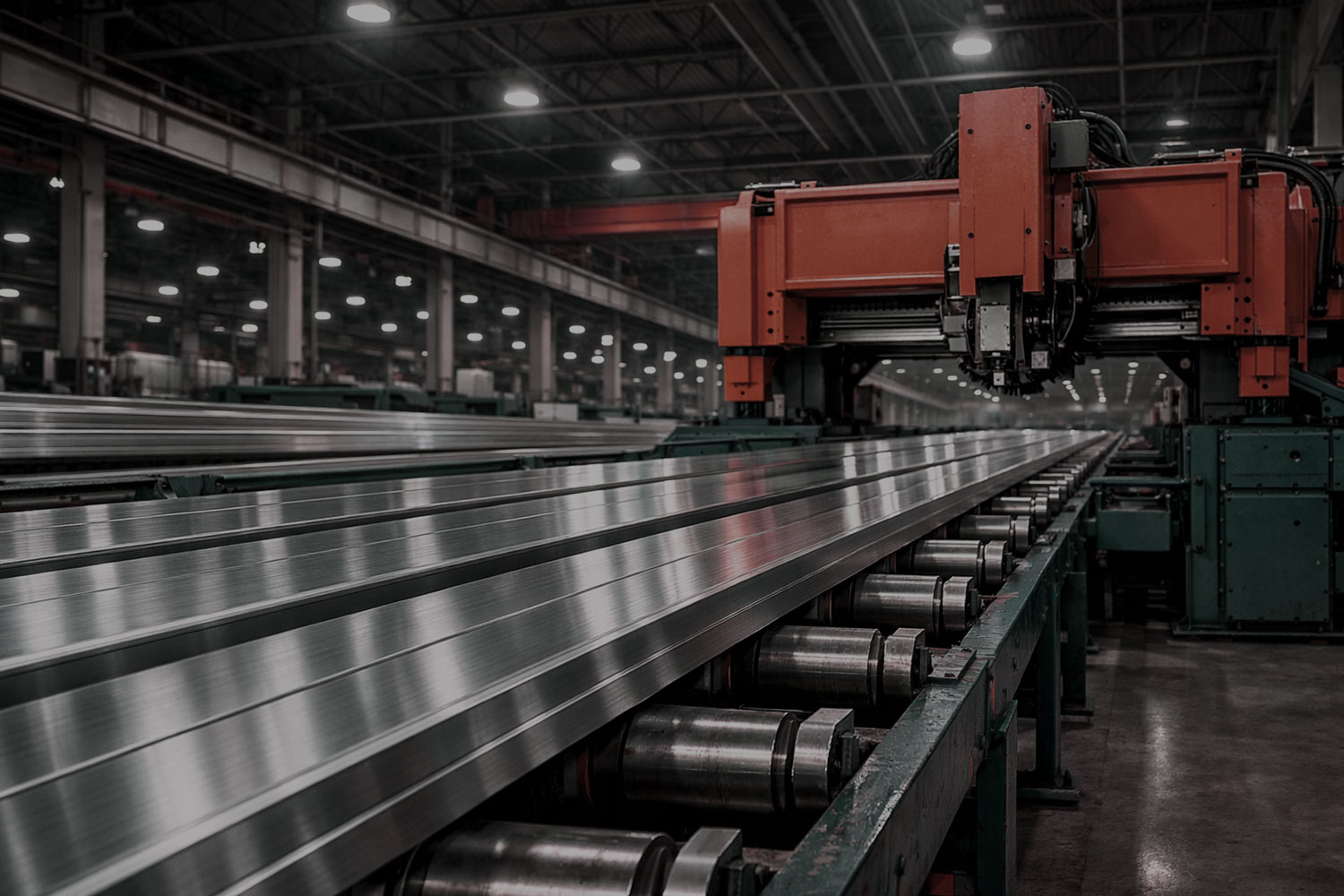
Introduction: India’s Rise as a Global Aluminium Extrusion Hub
Over the last decade, India has undergone a fundamental shift in how aluminium extrusion manufacturing is perceived globally. What was once considered a cost-driven, regionally focused industry has evolved into a technology-led, quality-driven, export-oriented manufacturing ecosystem.
Today, Indian aluminium extrusion manufacturers are no longer just supplying domestic infrastructure or construction markets. They are actively serving automotive OEMs, renewable energy developers, railway projects, aerospace suppliers, and global industrial customers across Europe, North America, the Middle East, and Southeast Asia.
At the heart of this transformation lies one key factor:
advanced aluminium extrusion press technology.
Modern high-capacity presses, integrated billet casting, precision die engineering, automation, and digital quality systems are reshaping how aluminium extrusions are produced, validated, and delivered from India to the world.
This blog explores how advanced press technology in India is redefining global aluminium supply chains, and why manufacturers like VAEC Aluminium Extrusion Pvt Ltd are emerging as strategic long-term partners for global buyers.
The Evolution of Aluminium Extrusion Manufacturing in India
From Conventional Presses to High-Performance Systems
Historically, aluminium extrusion in India relied on:
- Low to mid-capacity presses
- Manual process controls
- Limited alloy and profile complexity
- Regional or domestic demand focus
While effective for basic architectural and industrial profiles, these systems were not optimized for global OEM requirements, which demand:
- Tight dimensional tolerances
- High mechanical consistency
- Repeatable surface quality
- Long-length and wide profiles
- Traceability and certifications
The last 8–10 years have seen a decisive shift.
Indian extrusion plants have invested heavily in:
- Large-scale hydraulic extrusion presses
- PLC-controlled automation
- Integrated billet casting units
- Advanced die design and simulation
- Inline quality inspection systems
This evolution has aligned Indian manufacturing with European, Japanese, and North American standards.
What Defines Advanced Aluminium Extrusion Press Technology?
Advanced press technology goes far beyond tonnage. It is a combination of mechanical capability, process intelligence, and digital control.
1. High-Capacity Extrusion Presses
Modern extrusion presses in India now range from 1800 MT to 8600 MT and above, enabling:
- Wider profile sections
- Complex hollow and multi-void geometries
- High-strength structural profiles
- Long continuous extrusion lengths
These presses allow manufacturers to serve sectors such as:
- Infrastructure and formwork systems
- Automotive crash-management structures
- Solar mounting and tracker systems
- Rail and metro coach components
- Industrial machinery frames
2. Precision Control of Process Parameters
Advanced presses maintain strict control over:
- Billet temperature uniformity
- Ram speed and pressure
- Die heating consistency
- Metal flow balance
- Exit temperature control
This ensures:
- Minimal surface defects
- Uniform grain structure
- Reduced internal stresses
- Improved dimensional accuracy
Why Advanced Press Technology Matters to Global Supply Chains
1. Consistent Quality at Scale
Global buyers prioritize repeatability and reliability. Advanced presses allow Indian manufacturers to deliver:
- Identical profile geometry across large volumes
- Stable mechanical properties across batches
- Reduced rejection and rework rates
This consistency is critical for:
- Automotive production lines
- Modular construction systems
- Renewable energy installations
- Export contracts with strict penalties
2. Capability to Manufacture Complex Profiles
Modern applications demand more than simple shapes.
Advanced presses enable:
- Thin-wall hollow profiles
- Multi-chamber structural sections
- High aspect-ratio profiles
- Integrated functional features
This reduces:
- Secondary machining
- Assembly complexity
- Overall system weight and cost
For global OEMs, this translates to simplified supply chains and faster product development cycles.
India’s Strategic Advantage in Global Aluminium Supply Chains
Cost Efficiency Without Quality Compromise
India offers a unique combination of:
- Competitive manufacturing costs
- Skilled technical workforce
- Access to primary aluminium
- Advanced production infrastructure
With modern press technology, Indian manufacturers now deliver global-grade quality at optimized cost, making India a preferred sourcing destination.
Faster Lead Times and Supply Chain Resilience
Post-pandemic supply chain disruptions forced global buyers to rethink over-dependence on limited regions.
India offers:
- Geographic diversification
- Shorter production lead times
- Strong logistics connectivity via ports
- Increasing trade agreements
Advanced presses further reduce:
- Production cycle times
- Changeover delays
- Quality hold-ups
Integration of Billet Casting with Extrusion Presses
One of the most critical advancements in Indian extrusion plants is in-house billet casting integration.
Benefits of In-House Billet Casting
- Precise alloy chemistry control
- Improved billet cleanliness
- Uniform microstructure
- Reduced surface and internal defects
When billets are optimized specifically for a given press and profile, extrusion performance improves dramatically.
This integration strengthens India’s position as a value-added manufacturing base rather than a conversion-only supplier.
Automation and Digitalization in Modern Extrusion Plants
Advanced press technology is increasingly supported by:
- PLC and SCADA systems
- Automated billet handling
- Robotic profile run-out systems
- Real-time process monitoring
- Digital quality records
These systems enable:
- Predictive maintenance
- Reduced human error
- Traceability for every extrusion batch
- Compliance with international audits
For global customers, this means transparency, accountability, and trust.
Sustainability and Energy Efficiency in Advanced Press Operations
Global supply chains are under increasing pressure to reduce carbon footprint.
Advanced presses contribute by:
- Optimized energy consumption per kg
- Reduced scrap generation
- Improved recycling efficiency
- Lower re-extrusion losses
Many Indian plants now align with:
- ESG reporting requirements
- Customer sustainability audits
- Green procurement policies
This positions Indian extruders as future-ready partners.
Industry Applications Enabled by Advanced Press Technology
Infrastructure and Construction
- Wide formwork panels
- Structural beams
- Curtain wall systems
Automotive and EVs
- Battery enclosures
- Crash management systems
- Lightweight structural frames
Renewable Energy
- Solar mounting structures
- Tracker systems
- Wind turbine components
Railways and Transportation
- Coach body sections
- Interior modules
- Platform structures
Industrial Machinery
- Heavy-duty frames
- Automation equipment
- Precision housings
Role of VAEC Aluminium Extrusion Pvt Ltd in This Transformation
VAEC Aluminium Extrusion Pvt Ltd represents the new generation of Indian extrusion manufacturers.
The company’s focus on:
- Advanced extrusion press capability
- Integrated billet casting
- Precision die engineering
- Automation and quality systems
- Sustainable manufacturing practices
Allows VAEC to support global supply chains with confidence and consistency.
VAEC is not positioned as a commodity supplier, but as a strategic manufacturing partner delivering engineered aluminium solutions.
Conclusion: India’s Aluminium Extrusion Industry Is Entering a Global Leadership Phase
Advanced press technology has fundamentally changed the role India plays in the global aluminium extrusion ecosystem.
With:
- High-capacity presses
- Integrated manufacturing
- Digital quality systems
- Sustainability alignment
India is no longer just a sourcing alternative.
It is becoming a strategic pillar in global aluminium supply chains.
Companies like VAEC Aluminium Extrusion Pvt Ltd are at the forefront of this shift, building capabilities that meet the expectations of the world’s most demanding industries.


